When I decided to read The Christian Zombie Killers Handbook by Jeff Kinley I didn’t know what I was getting into. The author takes an interesting path on how he wrote the book. This book is both fiction and non-fiction. The author first writes a chapter that tells a story of the life after the zombie apocalypse has begun, then follows it up with a chapter explaining how the chapter before relates to our Christian walk. While reading the book, I felt like it was too disjointed but after reflecting on the experience I realize that the author has a great talent tying together a story that he has made up with the ultimate story into a cohesive unit. I actually finished this book quite a while ago, but have spent a lot of time trying to figure out what review to write. After considering, I have to say that the author has written a pretty good book. Like I said, it seemed disjointed at the time, but after reflecting, I realized how good of a book it really was. If you are into zombie fiction at all or how it can relate to your Christian walk, you should definitely pick up this book.

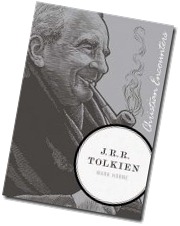
Being a lover of the Lord of the Rings trilogy, when given the opportunity to read a biography of J.R.R. Tolkien, I was excited. The man gave direction to the entire genre of fantasy fiction, I wanted to know what made him tick. In this book, Mark Horne does a great job of explaining how the events of his life affected how and what he wrote about. It has always amazed me how men and women could have the creativity to come up with the worlds that they create through fiction. In his thorough and well researched book, Mark Horne does a great job opening up the world of J.R.R. Tolkien to the reader. One of my favorite parts of the Tolkien story was his relationship with fellow author C.S. Lewis who says that J.R.R. Tolkien was instrumental in his coming to faith. If you are a lover of Tolkien’s work or the fantasy genre in general, you should definitely read this book.

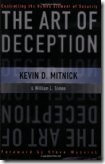
You know a book about hacking and methods to protect your company from social engineering attacks written by a guy who is such a great hacker that part of his sentence is that he is never allowed to surf the internet by himself (he has someone else check his email for him) is going to be a great read on how Hackers (or social engineers as they are called in the book – he explains why) infiltrate your company to steal your sensitive information. The typical business owner would do everything they could to beef up the security infrastructure within their business, often deploying the most state of the art (at the time) gadgets that money can buy, then they would rest on their laurels because they knew they were secure…As Mitnik goes on to explain, no, no they are definitely not secure, they have neglected the weakest point in any security infrastructure…the people.
In a very engaging read, The Art of Deception explains the very real threat from social engineers and how to best combat it as someone responsible for protecting your companies assets. I would recommend this very well written book for any person in any company…seriously…Mitnik explains how everyone in your organization is part of the security infrastructure and how they need to be properly educated on the security protocols (that should be, but in most places aren’t) in place at any company. I really can’t say it enough, if you employed at any company with trade secrets (or really any company for that matter) you need to read The Art of Deception by Kevin Mitnik. No really, go, I don’t want to see you around here till you have read it (just kidding, but really if you can’t afford it, go check it out from the library)…

General Reaction: Great book on how businesses should be run.
Star rating: 3.5 out of 5
General Plot Synopsis: In this book, Malloch investigates the Spiritual Capital built by companies and how that capital helps them become and stay great enterprises.
Extended Reaction: When picking out this book, I was greatly intrigued by the fact that the book had been featured on PBS (my son has become hooked onto the PBS show Word World in recent months). I thought this was a great book. When you have books like Jim Collins’ Good to Great and Built to Last that take a look at the organizational structure it is highly enlightening to see the spiritual aspect to what makes companies great and where others fall short. If you are looking for a book that focuses on how Christian businesses work, this is not the book for you. The author’s main aim was to define the term Spiritual Capital (and that Spiritual Capital doesn’t mean that it is primarily Spiritual Capital, he looks at companies that range the spectrum of religious belief) and show how it affects the success and impact of the businesses that employ it.

Gut Reaction: Not quite the book that I was expecting, but a good book overall.
Rating: 3 out of 5
General Plot Synopsis: The trick about giving a general plot synopsis for a book like this is that the book really doesn’t have a plot. This book is similar to Now, That’s a Good Question by R. C. Sproul. This is basically a question and answer book where Max Lucado takes letters and other questions that he has received over the years and puts his answers in book form.
Extended Reaction: Before grabbing this book, I probably should have done a little research. If I had, I probably would have had a better gut reaction to this book. I was expecting typical Max Lucado style like He Still Moves Stones or He Chose the Nails. I was pleasantly surprised though at how much I enjoyed the book. While I don’t agree with Max theologically on every issue, it was an interesting look into Max’s mind where you could really see his heart for the people he has been leading for so many years. If you are a pastor or someone who regularly gets questions about what the Bible says about different everyday life issues, this would be a good book to add to your library.